

Let’s create a mixed media heart art journal page! This layered page combines water-soluble Distress Oxides, watercolor, gold acrylic paint, and cold wax for a rich, textured finish. The result is soft, luminous, and full of depth – with a little art-science magic along the way.
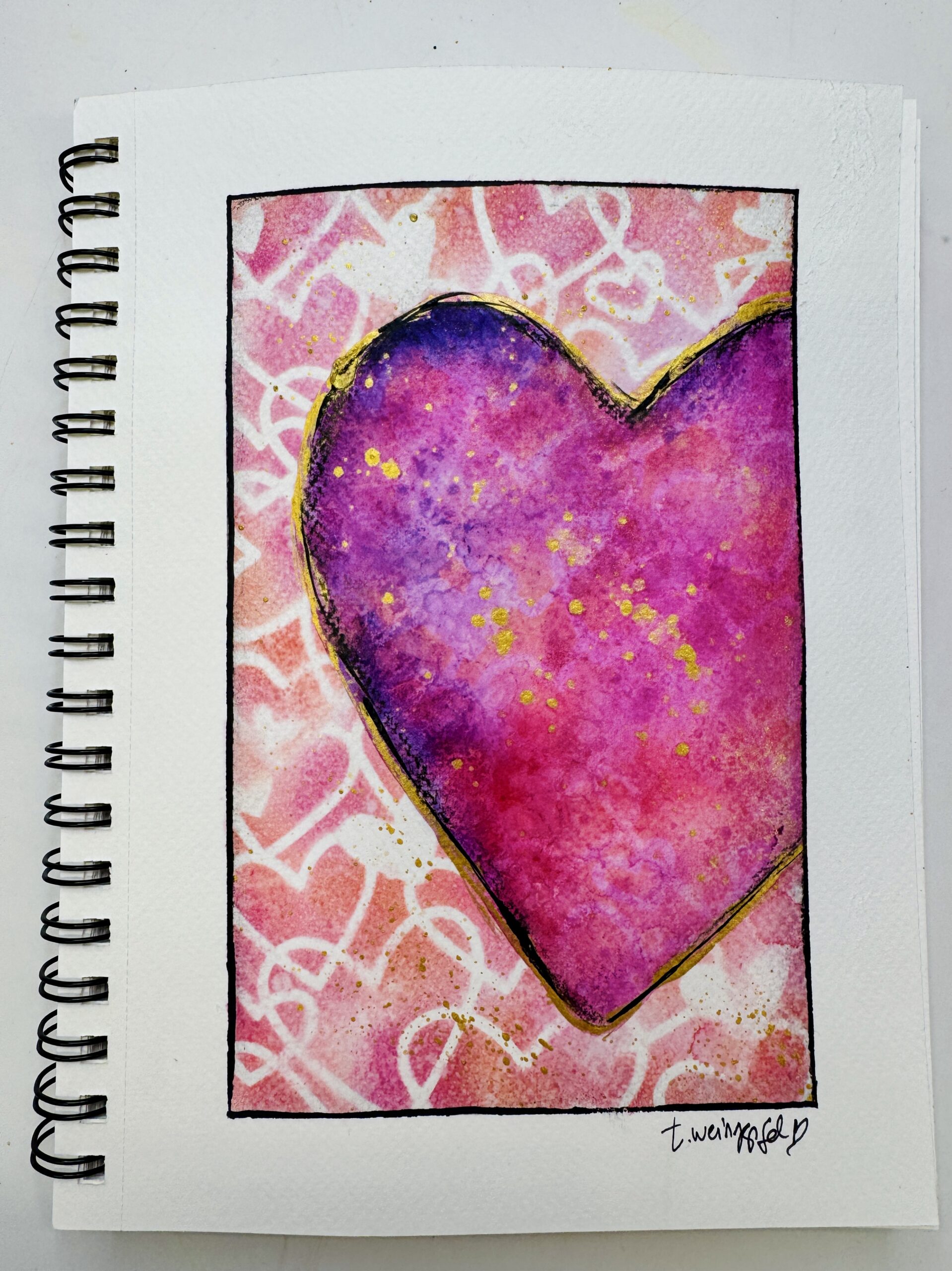
Prep your art journal page by taping off the edges with painter’s tape. Next, secure your heart stencil to your paper using painter’s tape so it doesn’t shift. Using a soft blending stencil brush, apply Distress Oxide inks in layers. Start with lighter pinks and reds and gradually deepen the color by blending in richer tones like magenta and purple. Work in soft circular motions, building the color slowly rather than applying heavy pressure all at once.
Continue blending across the page, allowing the colors to overlap naturally. Don’t worry about perfection or visible transitions. The background will soften beautifully in the next step.
Once you’ve finished blending, remove the stencil. Lightly spritz the page with water. Distress Oxides are water-reactive, so the pigment will begin to bloom, soften, and create subtle watercolor-like movement.
For added texture, lightly mist rubbing alcohol over portions of the page. The alcohol evaporates quickly and causes the pigment to separate in interesting ways, creating delicate variations and organic texture. You can gently tilt the page to guide the movement or blot lightly with a clean cloth if areas become too saturated. Allow the background to dry completely before moving forward.
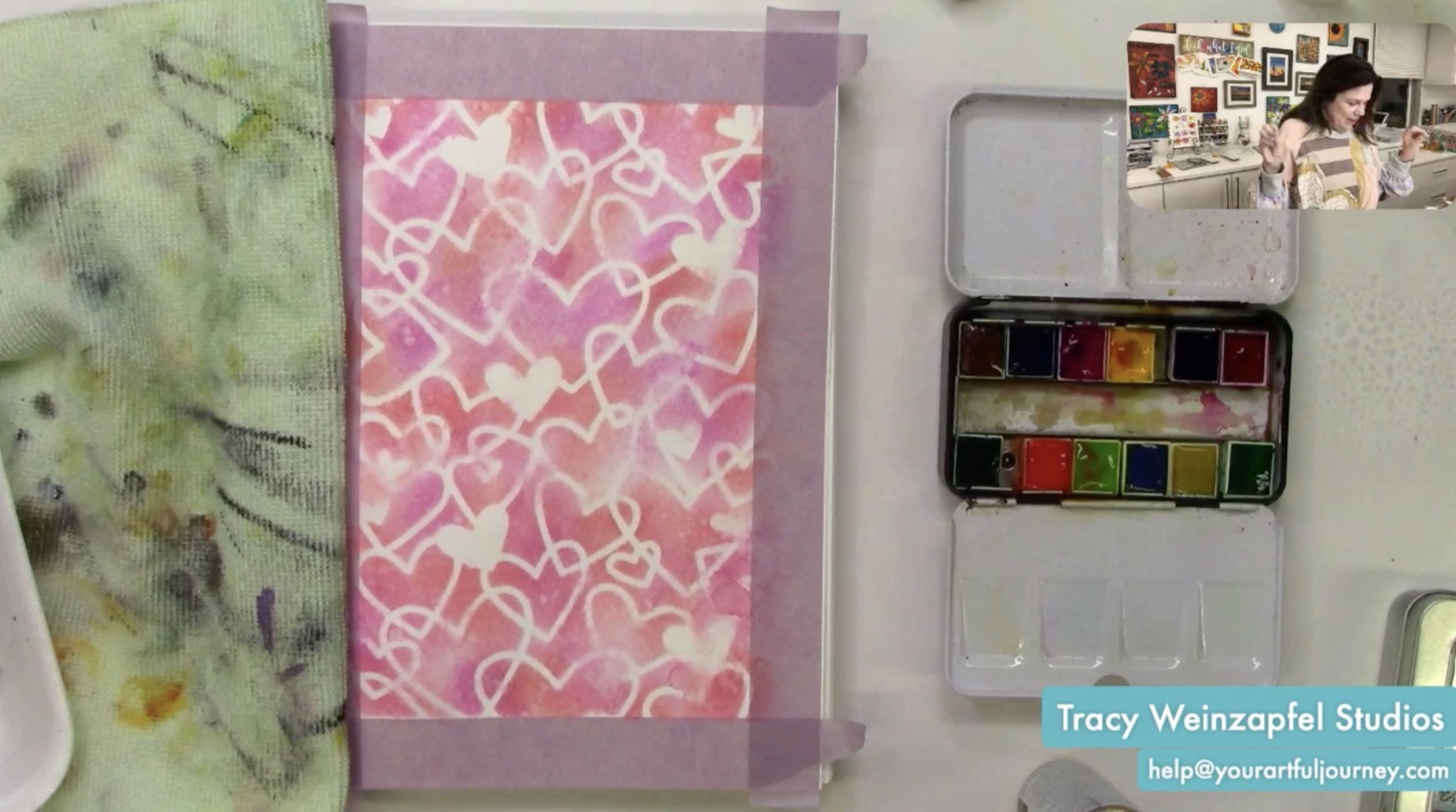
Using a clean brush, pre-wet a large heart shape with water. Watercolor always follows water, so this step ensures that the pigment stays within your intended boundaries.
Load your brush with vibrant tropical watercolor tones such as magenta, fuchsia, and purple. Apply the paint while the surface is still wet and allow it to flow naturally. Deepen the edges with slightly darker pigment while keeping portions of the center lighter for dimension. Let the paint move and blend organically. That movement creates the beautiful texture within the heart.
If color begins to pool too heavily in one area, dry your brush and gently lift excess moisture.
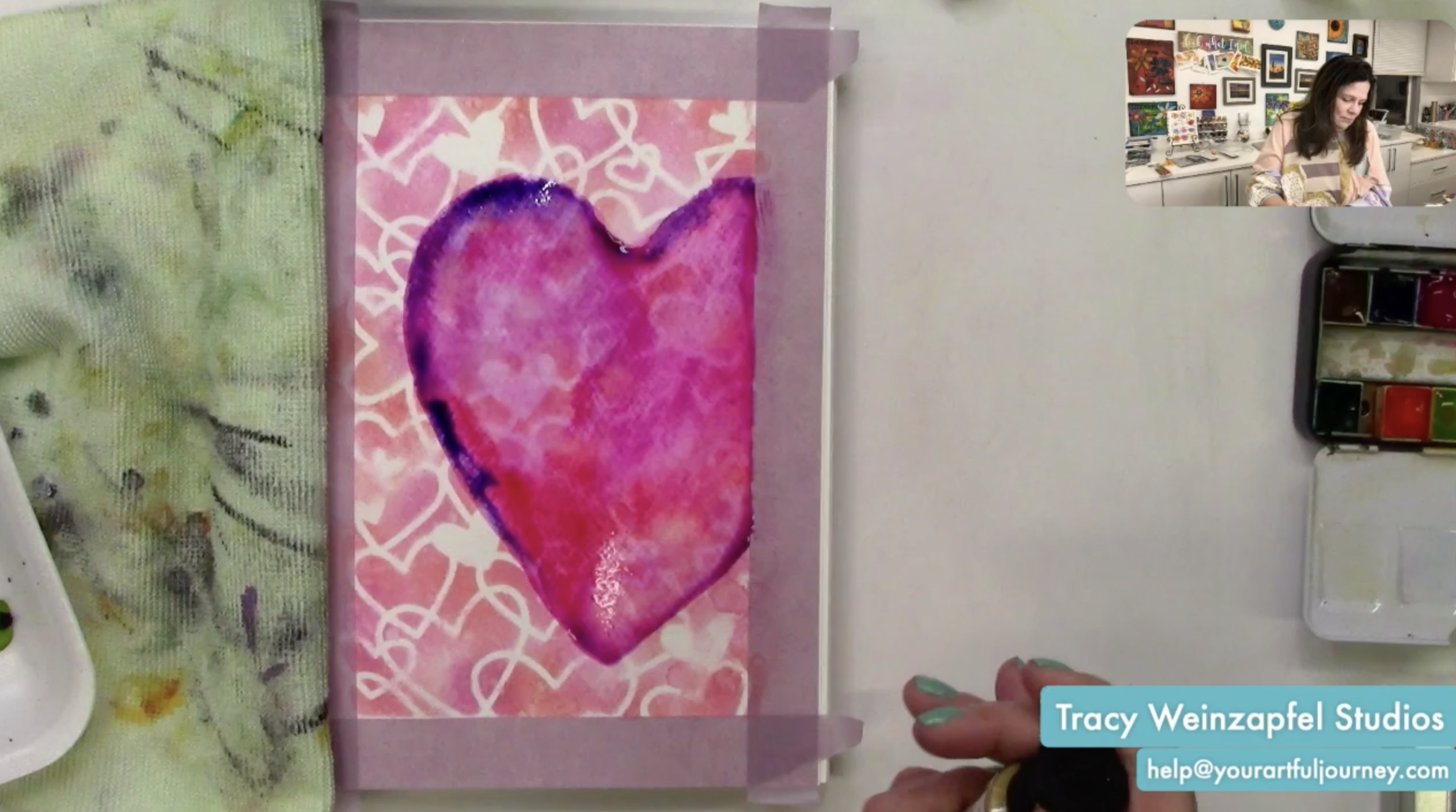
While the watercolor is still damp, introduce gold acrylic paint around the perimeter and in select areas inside the heart. Because acrylic and watercolor behave differently, the gold will separate slightly and create a stunning textured effect as it interacts with the moisture below.
Apply the gold sparingly at first. You can dab it along the edges, flick tiny speckles inside the heart, or lightly brush it along the outline. The separation that happens here is part of the magic — it’s where art meets science. Allow this layer to dry completely before continuing.
Once dry, use a carbon black aquarellable pencil to outline the heart. If the surface is even slightly damp, the pencil will soften and blend slightly, creating a beautiful distressed edge. You can gently smudge parts of the outline with your finger to add depth and shadow. This step adds contrast and helps the heart stand out against the soft background.
Using a black Sharpie, draw a simple border around the outer edge of the page. This frames the composition and grounds the artwork visually, especially if part of the heart extends off the page. The border does not need to be perfectly straight. Slight imperfections add character and reinforce the handmade feel.
When the entire piece is completely dry, apply Dorland’s Cold Wax Medium using a soft cloth in circular motions. Wax should always be the final step because once applied, you cannot paint over it.
The wax seals the water-soluble materials, creates a matte finish, and subtly unifies all of the layers. It also enhances the tactile quality of the page. Allow the wax to dry fully, and if desired, buff lightly with a clean cloth for a soft sheen while maintaining the matte appearance.
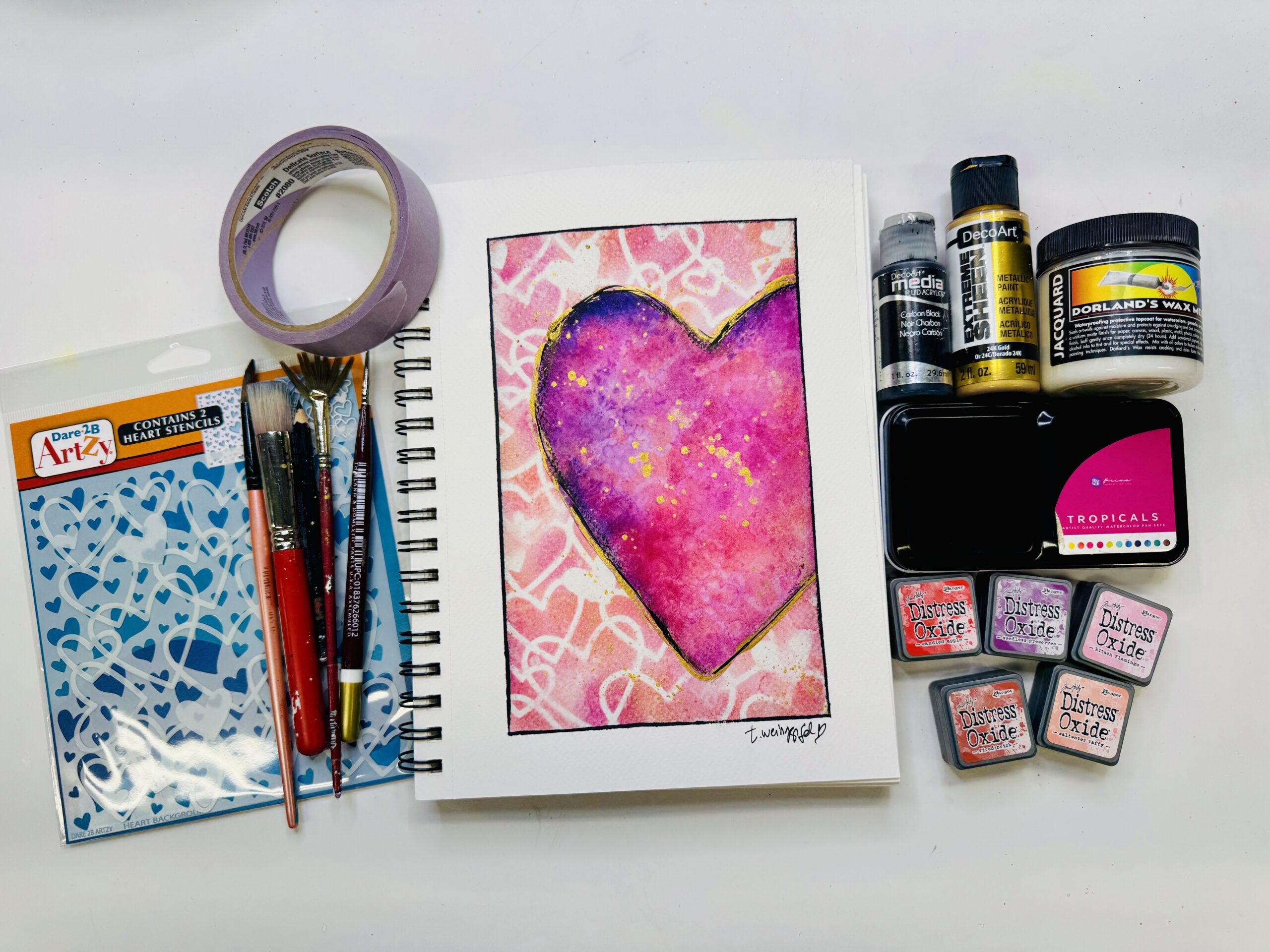
This mixed media heart combines reactive ink blending, watercolor flow, acrylic separation, and wax sealing to create a layered, textured result. The background feels soft and dreamy, while the heart remains bold and dimensional.
You can easily adapt this process by changing the color palette. Experiment. Layer. Let the materials interact. And most importantly, do something creative every day!
Watch the replay below!
Thank you for joining in on the creative fun. Join us LIVE every Wednesday at 5:30 pm PST on Facebook at Tracy Weinzapfel Studios.
Join the waitlist for Your Artful Journey! This is my exclusive creative membership where you can explore the world of art journaling! Join a community of support and inspiration with interactive art sessions full of tips and tricks, conversation, Q & As, and most of all, FUN!
Supply List:
- Fabriano or Grumbacher 7 X 10 Watercolor Journal
- Painter’s Tape
- Watercolors: Tropicals
- Distress Oxide Stamps Pads: Variety of Colors in Reds, Pinks & Purples
- Decoart Acrylic Paints: Extreme Sheen 24k Gold
- Decoart Acrylic Paint: Carbon Black
- Stencil: Dare 2b Artzy Heart Duo
- Brushes: Tracy Weinzapfel Sets
- Liner Brush: Micron 10/0 X Long Liner Brush
- Pencil: Black Aquarellable
- Sealer: Dorland’s Wax
Check out Tracy’s Art Journal Starter Kit!
Tracy’s Resources Page and visit Tracy’s Shop