
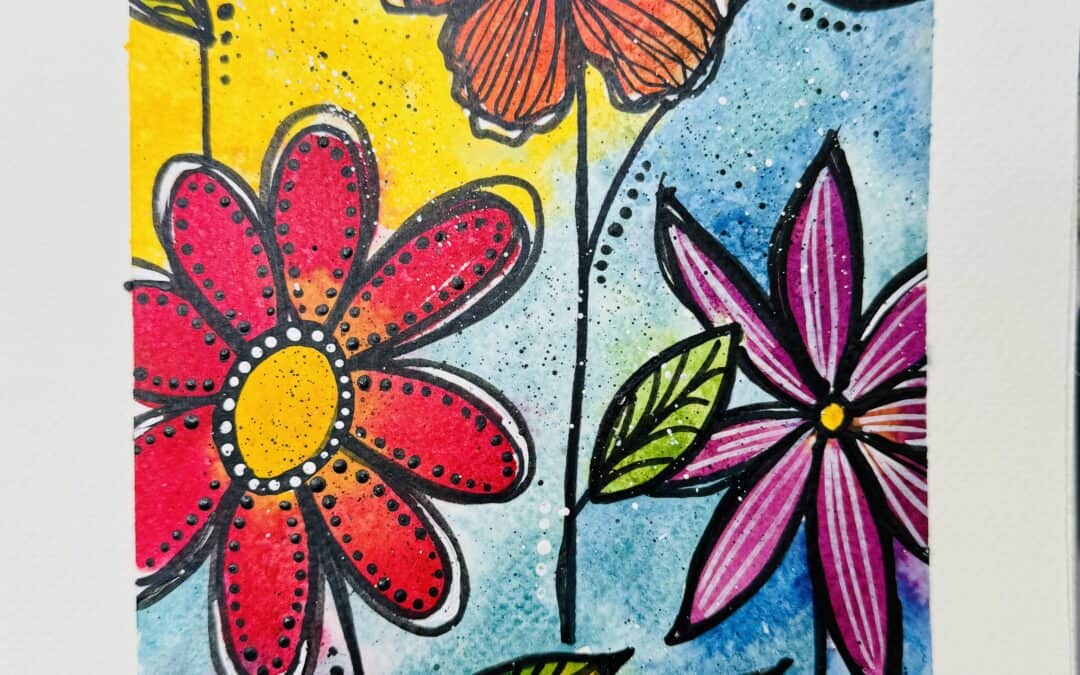
Sometimes the best thing you can do for your creativity is stop overthinking and simply play. We’ll begin with simple hand-drawn flowers and leaves, fill the page with flowing watercolor, add texture with rubbing alcohol, and finish everything with bold black linework, paint pen details, dots, splatter, and plenty of personality. The finished page feels playful, graphic, and a little Dr. Seuss-inspired… and it’s a great reminder that you never have to stay inside the lines to create something beautiful.
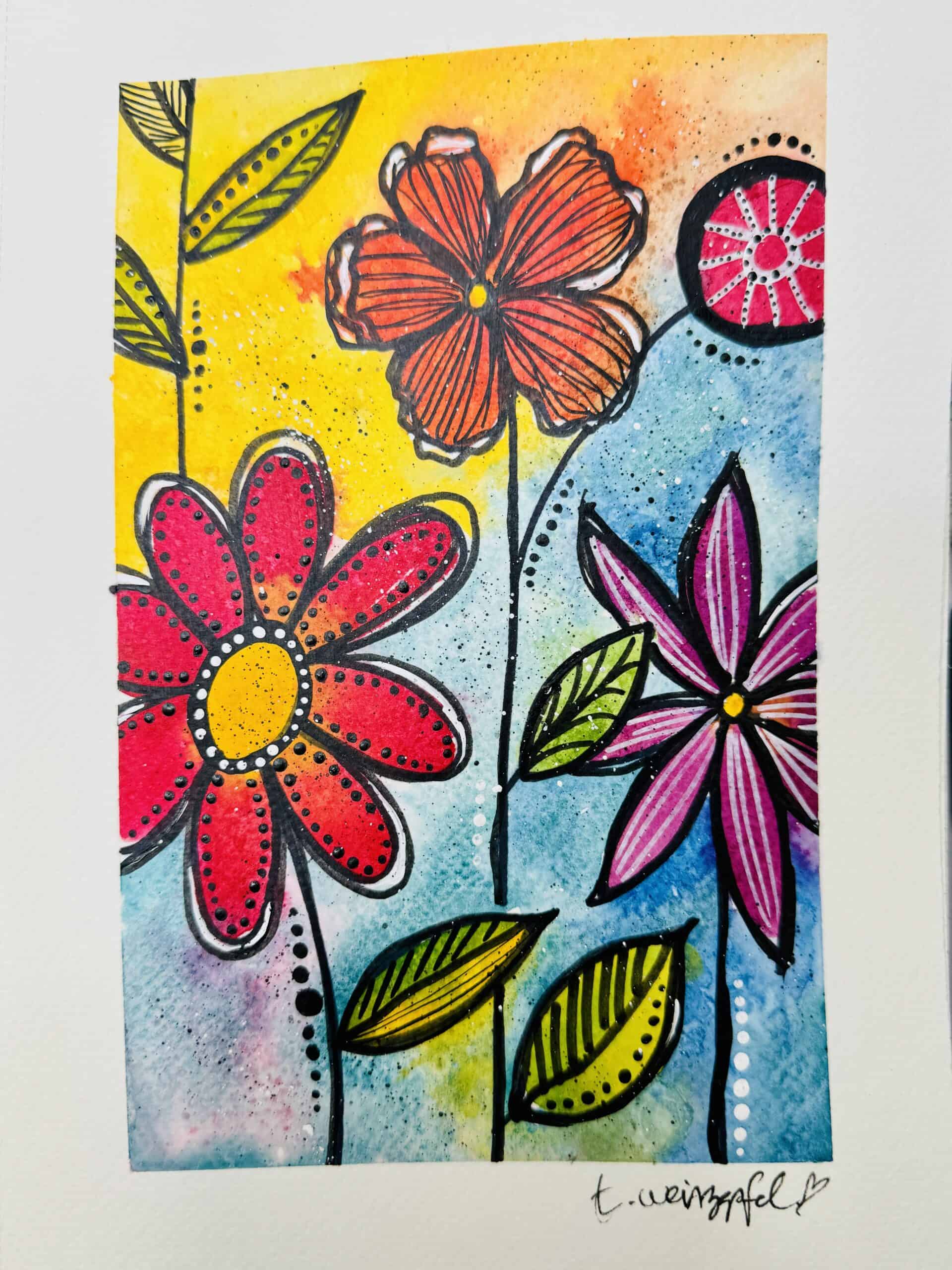
Begin by securing your watercolor journal page with painter’s tape. Press the tape down firmly along all four sides so the watercolor does not seep underneath. This will hold the page in place while you work and give you a crisp white border once the artwork is finished. Mist your watercolor palette with water to activate the colors.
Using a Fine or Ultra Fine Sharpie, begin drawing large, whimsical flowers directly onto the page. Keep the shapes simple and exaggerated, using rounded petals, pointed petals, long stems, graphic leaves, and playful circular flower centers. Let some of the flowers extend off the edges of the page so the composition feels full and energetic. Do not worry about perfect symmetry or realistic botanical shapes. The loose, slightly quirky drawing style is part of what gives this page its personality.
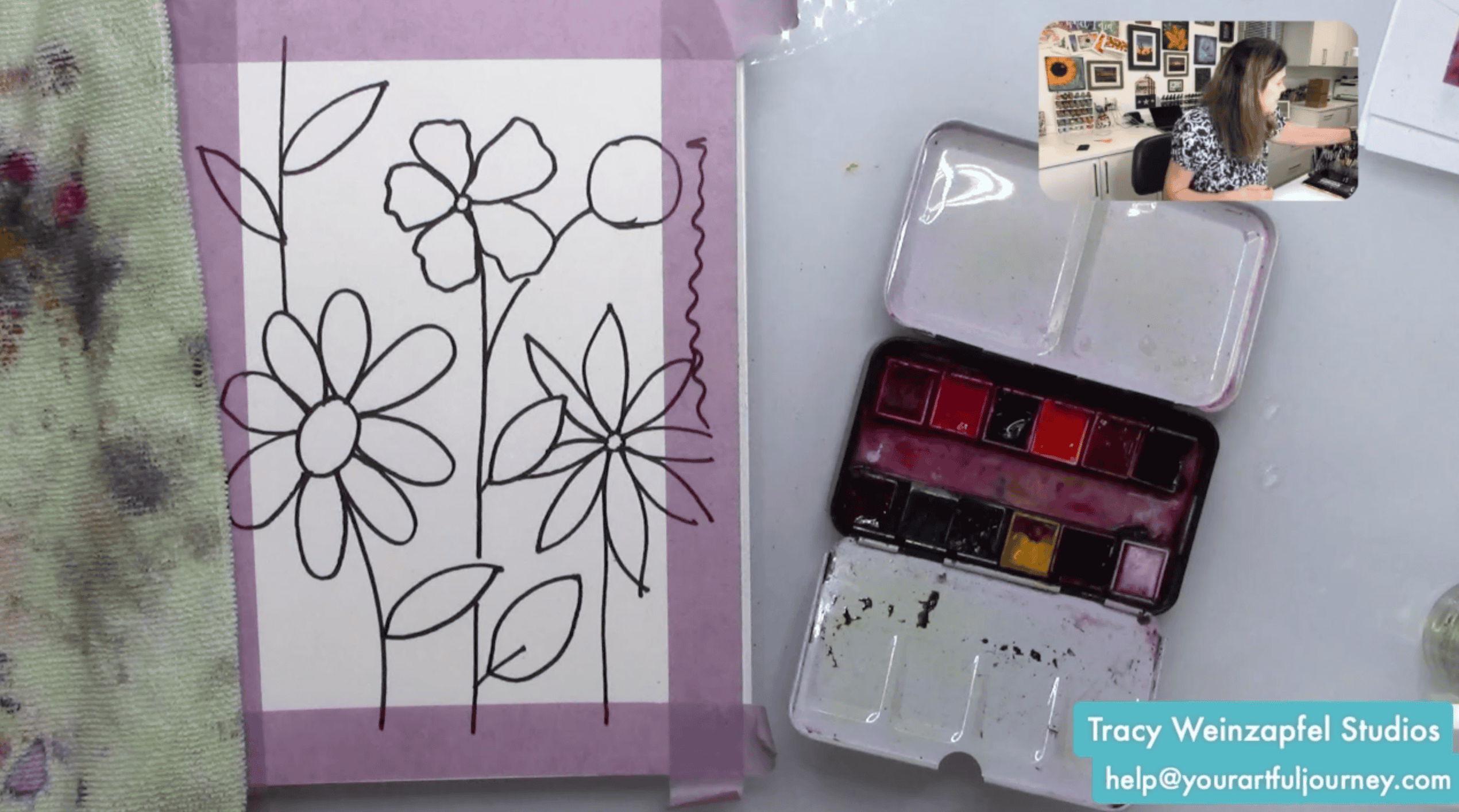
Next, start filling the flowers and leaves with bright watercolor paint. Use reds, hot pinks, oranges, purples, yellows, greens, and teals, allowing the pigments to move freely. Do not feel like you need to stay perfectly inside your original lines. In fact, letting the paint move beyond the edges creates a much looser, more expressive result.
Work in sections, adding water first and then dropping color into the wet areas. The watercolor will naturally bloom and spread wherever the water travels. Let neighboring shades overlap and mingle, especially within the petals and background.
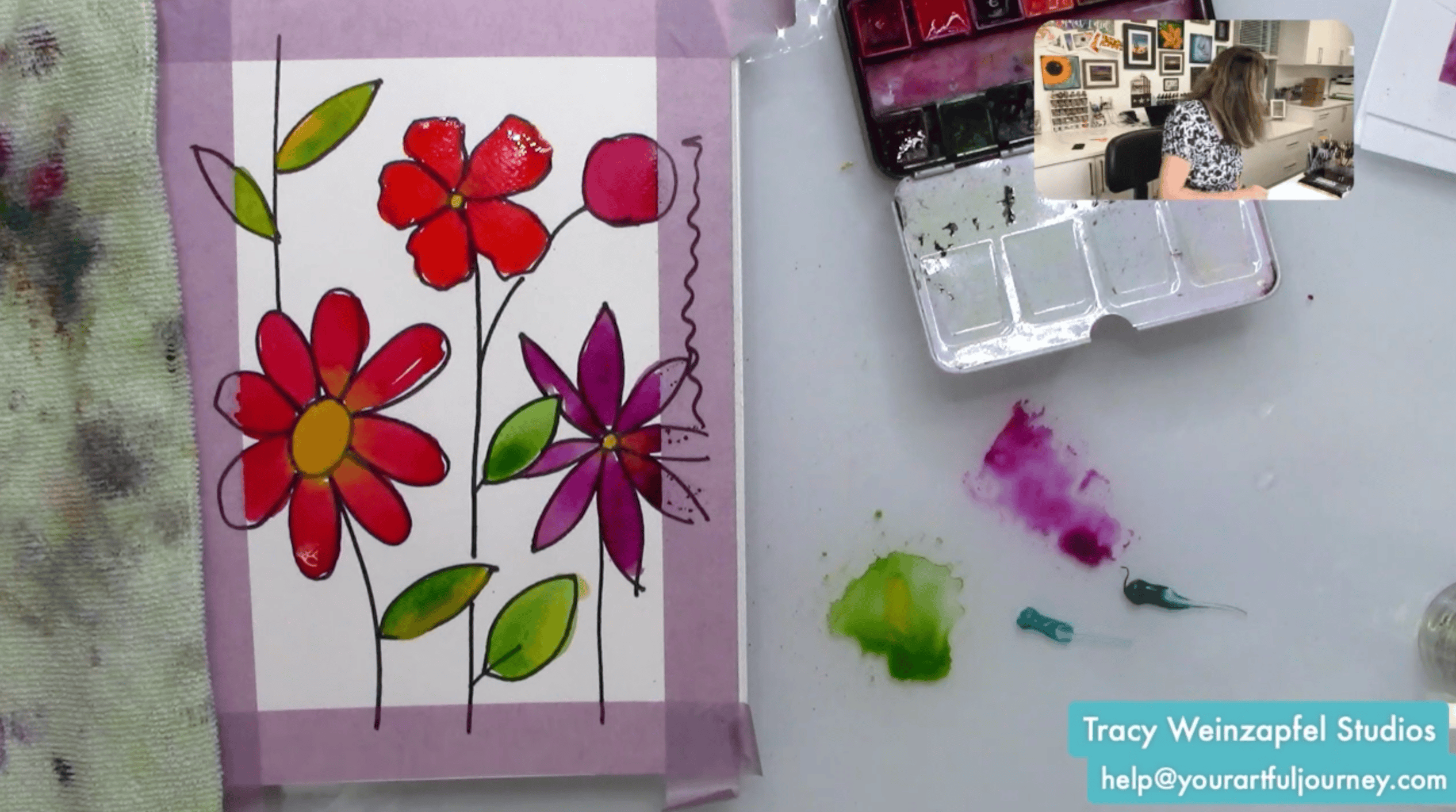
Next, work on the background. Continue adding watercolor around the flowers until the entire background feels lively and connected. Bring bright yellow and orange into the upper area, then allow blues, teals, purples, and hints of green to move through the lower half of the page. Keep the background loose and uneven, with lighter and darker areas throughout.
If the paint begins to pool, dry your brush on a paper towel and use it to lift away some of the excess water. You do not need to remove every puddle, just enough to help the page dry without losing all of the beautiful watercolor texture.
While portions of the watercolor are still wet, sprinkle or flick rubbing alcohol across the page. The alcohol pushes the pigment away and creates unusual rings, blooms, and speckled textures. Add it sparingly at first, then build up the effect in areas where you want more visual interest. Allow the watercolor to air dry or use a heat tool to speed up the process.
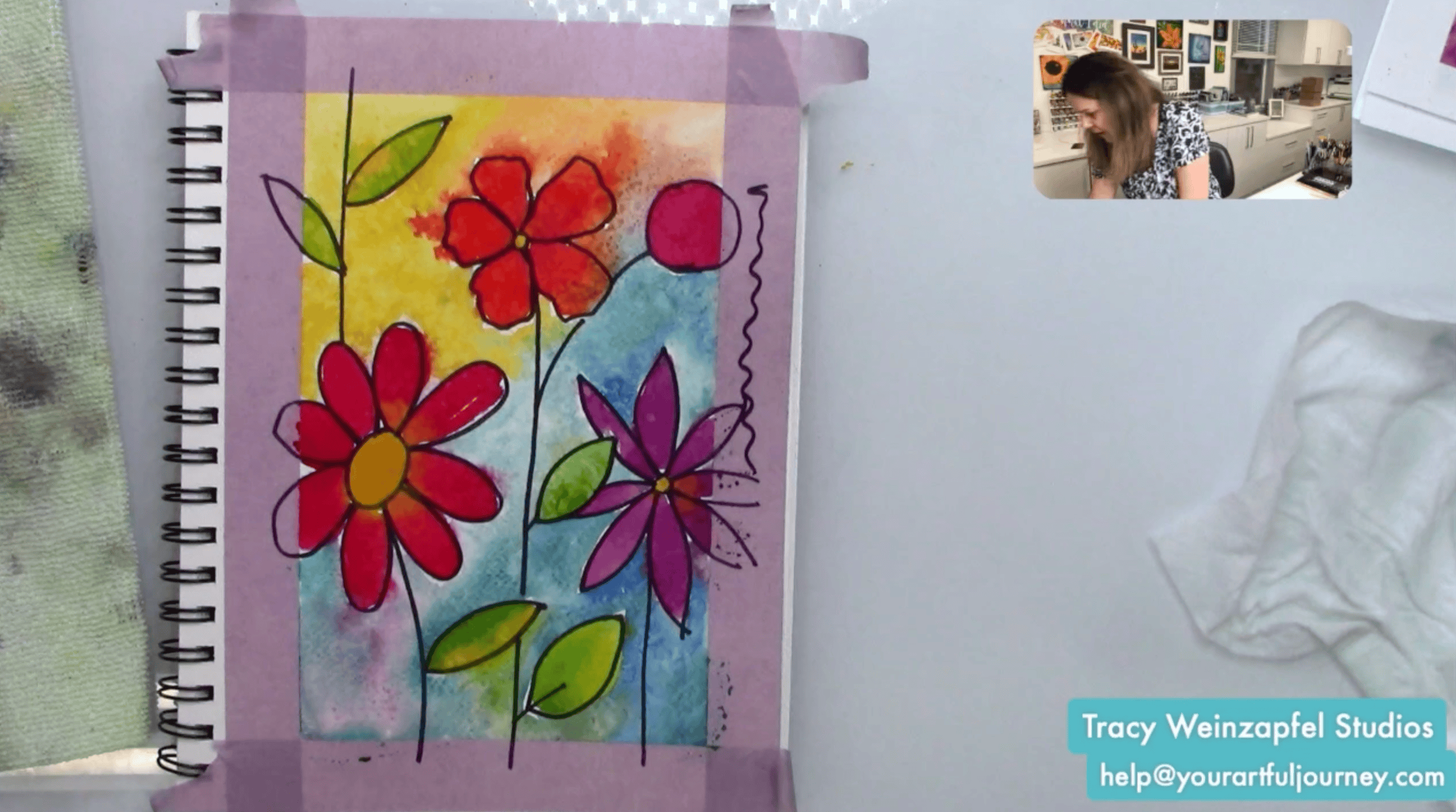
Use black and white Posca paint pens to strengthen selected outlines and add graphic details to the flowers. Do not feel like you need to trace every original line exactly. Instead, create new lines where needed, overlap earlier shapes, and allow the design to evolve.
Add white highlights along some petal edges, inside leaf shapes, and through selected flower sections. The contrast between the bold black outlines and white accents will help the colorful watercolor stand out. For stronger, more vivid details, use Carbon Black acrylic paint with a liner brush.
Use a foam detailer, dotting tool, or the end of a small brush to add dots throughout the design. Place black dots around petals, flower centers, and stems, then add white dots in other areas for contrast. You can also create lines, stripes, and repeated marks inside the flowers and leaves. These small decorative details help transform simple watercolor shapes into a playful mixed media composition.
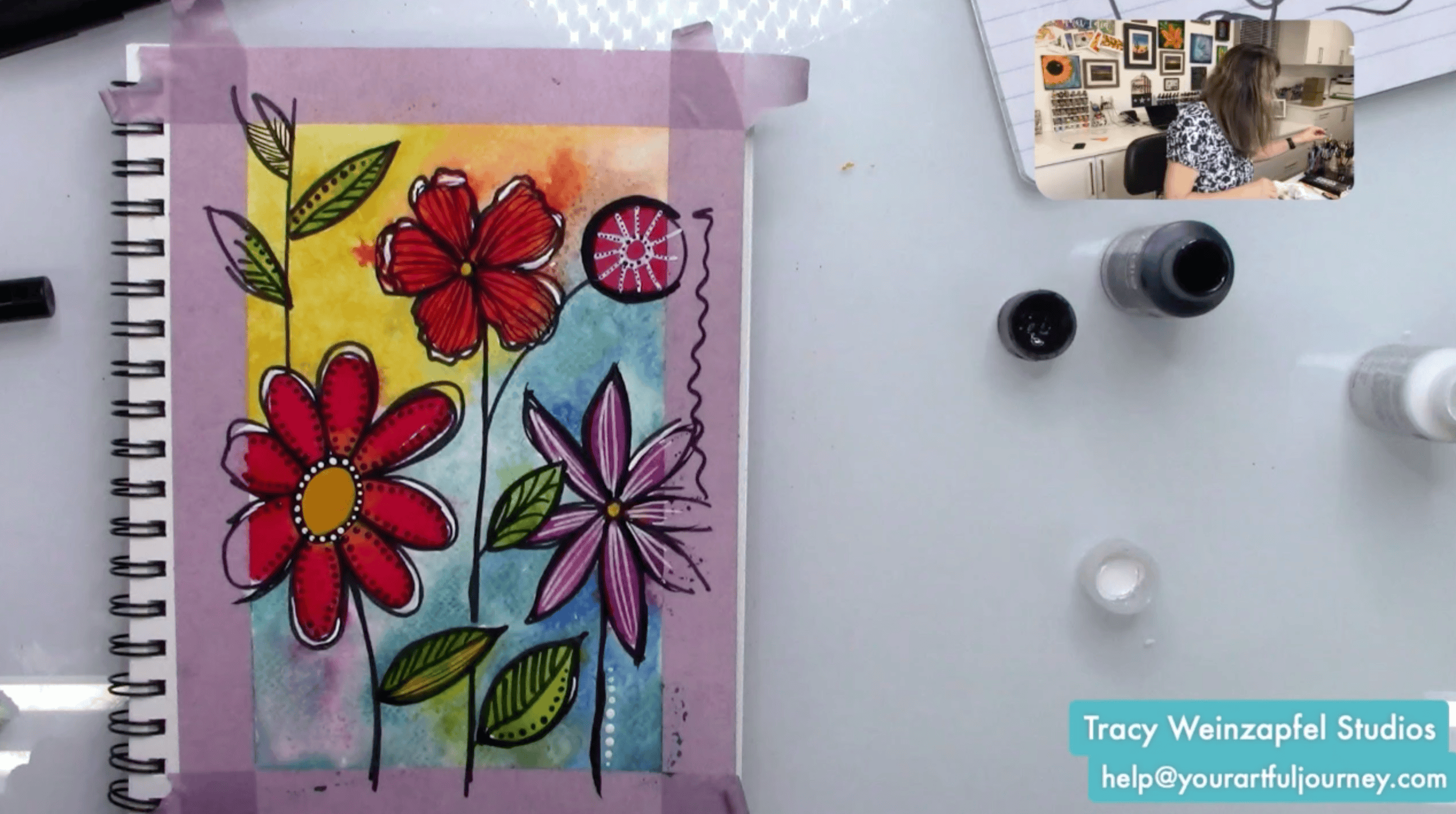
Load a fan brush or small brush with diluted white acrylic paint and lightly splatter it across the page. Repeat with black paint if you want a little more contrast and texture. Keep the splatter loose and uneven so it looks natural.
Once every layer is completely dry, apply a thin coat of Dorland’s Wax Medium using a soft cloth or paper towel. Gently rub the wax over the entire painted area, then buff it into the surface. This protects the watercolor, acrylic paint, paint pens, and linework without reactivating the water-soluble layers.
Carefully peel away the painter’s tape at a 45-degree angle to reveal the clean white border. Sign your artwork and take a moment to enjoy all of the bright colors, playful lines, and tiny details.
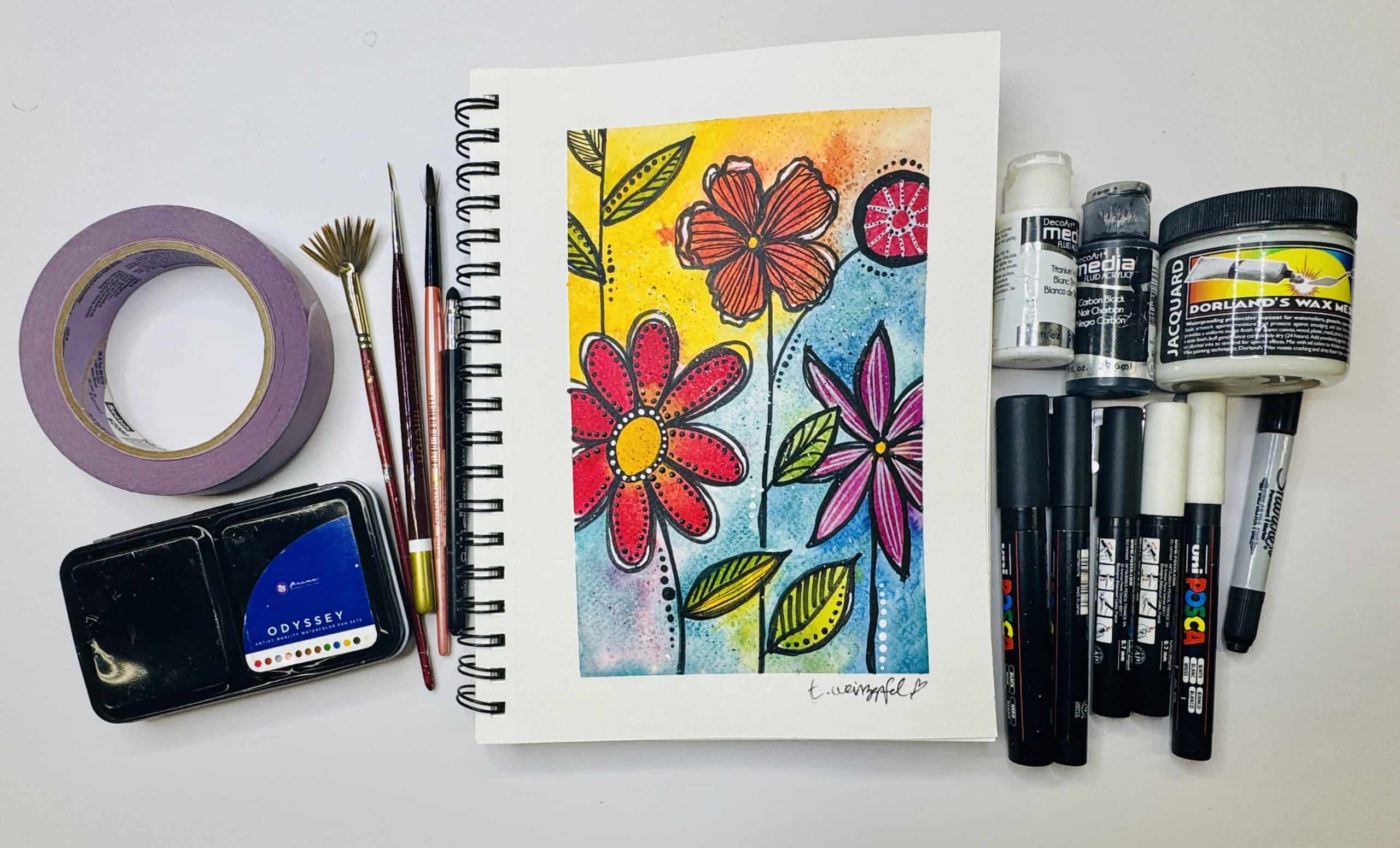
This whimsical watercolor flower page is a perfect project for days when you need to relax, loosen up, and let creativity take the lead. There is no pressure to draw perfect flowers, stay inside the lines, or plan every color in advance. The watercolor creates movement, the bold linework adds structure, and the dots, stripes, and splatter bring everything together!
Watch the replay below!
Thank you for joining in on the creative fun. Join us LIVE every Wednesday at 5:30 pm PST on Facebook at Tracy Weinzapfel Studios.
Join the waitlist for Your Artful Journey! This is my exclusive creative membership where you can explore the world of art journaling! Join a community of support and inspiration with interactive art sessions full of tips and tricks, conversation, Q & As, and most of all, FUN!
Supply List:
- Fabriano Watercolor Journal 7 X 10
- DecoArt Media Fluid Acrylics: Carbon Black and Titanium White
- Watercolors; Odyssey
- Posca Paint Markers (White & Black)
- Dorlands Wax Medium (clear wax medium)
- Paint brushes – Tracy Weinzapfel Brush Sets
- 10/0 Micron Liner Brush
- Painter’s Tape
Check out Tracy’s Art Journal Starter Kit!
Tracy’s Resources Page and visit Tracy’s Shop
Ace thank you