

This soft botanical art journal page is all about letting a new product lead the way. We start with shimmering Distress Spritz sprays, watch the colors blend into a dreamy background, and then build loose leaves and botanical shapes over the top with black acrylic paint and a liner brush. Metallic gold details, small dot clusters, and a few fun accents give the finished page just enough contrast without covering up that beautiful glow underneath.

Begin by applying painter’s tape around the edges of your watercolor art journal page. Press the tape down firmly so the sprays do not seep underneath. This will also give you a clean white border when the artwork is finished.
Because this project uses sprays, protect the surrounding pages and workspace before you begin. A glass mat or nonporous work surface makes cleanup especially easy.
Distress Spritz sprays contain mica particles that settle at the bottom of the bottles, so shake each color very well before using it. Move the bottle back and forth until the shimmer is fully mixed into the liquid. Continue to shake the bottles periodically while working so the metallic particles stay suspended and spray evenly across the page.
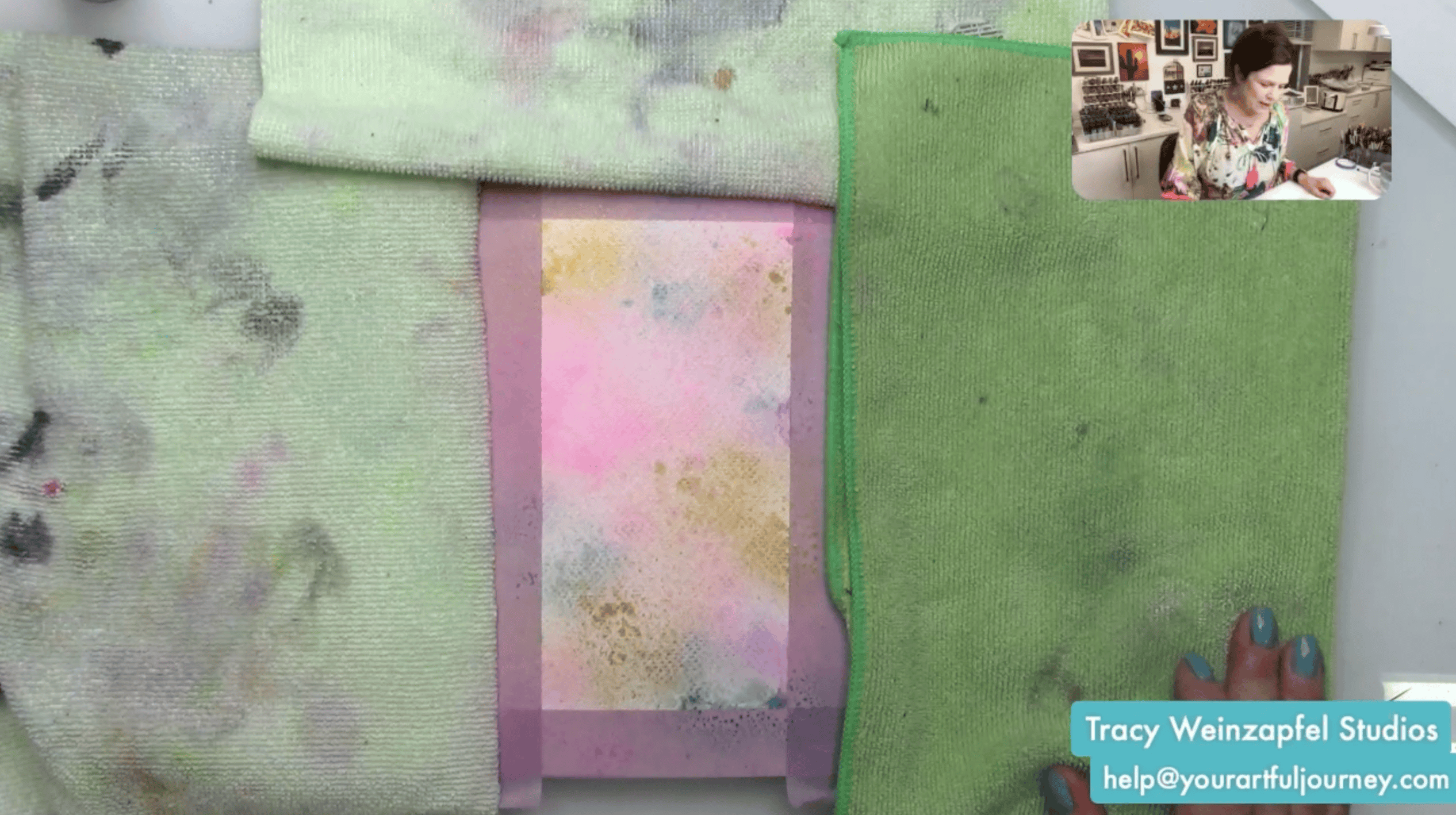
Begin misting the page with Kitsch Flamingo and Fossilized Amber. Keep the sprays light at first and allow some white paper to remain visible. Add Tumbled Glass over selected areas. As the blue overlaps the warmer shades, it creates beautiful soft neutrals and hints of violet. Allow the colors to blend naturally rather than trying to control every mark.
The Spritz sprays are water-soluble, so the colors may continue moving as they overlap. Embrace the unexpected combinations and let the background develop.
Continue layering the three sprays until you are happy with the balance of pink, gold, blue, and violet. Keep the application uneven so the finished page has lighter areas, deeper color, and plenty of shimmer. Avoid completely saturating the paper. You want enough color to create atmosphere, but the black botanical linework still needs room to stand out later.
Use a heat tool to dry the background completely. Keep the tool moving to prevent overheating the paper.
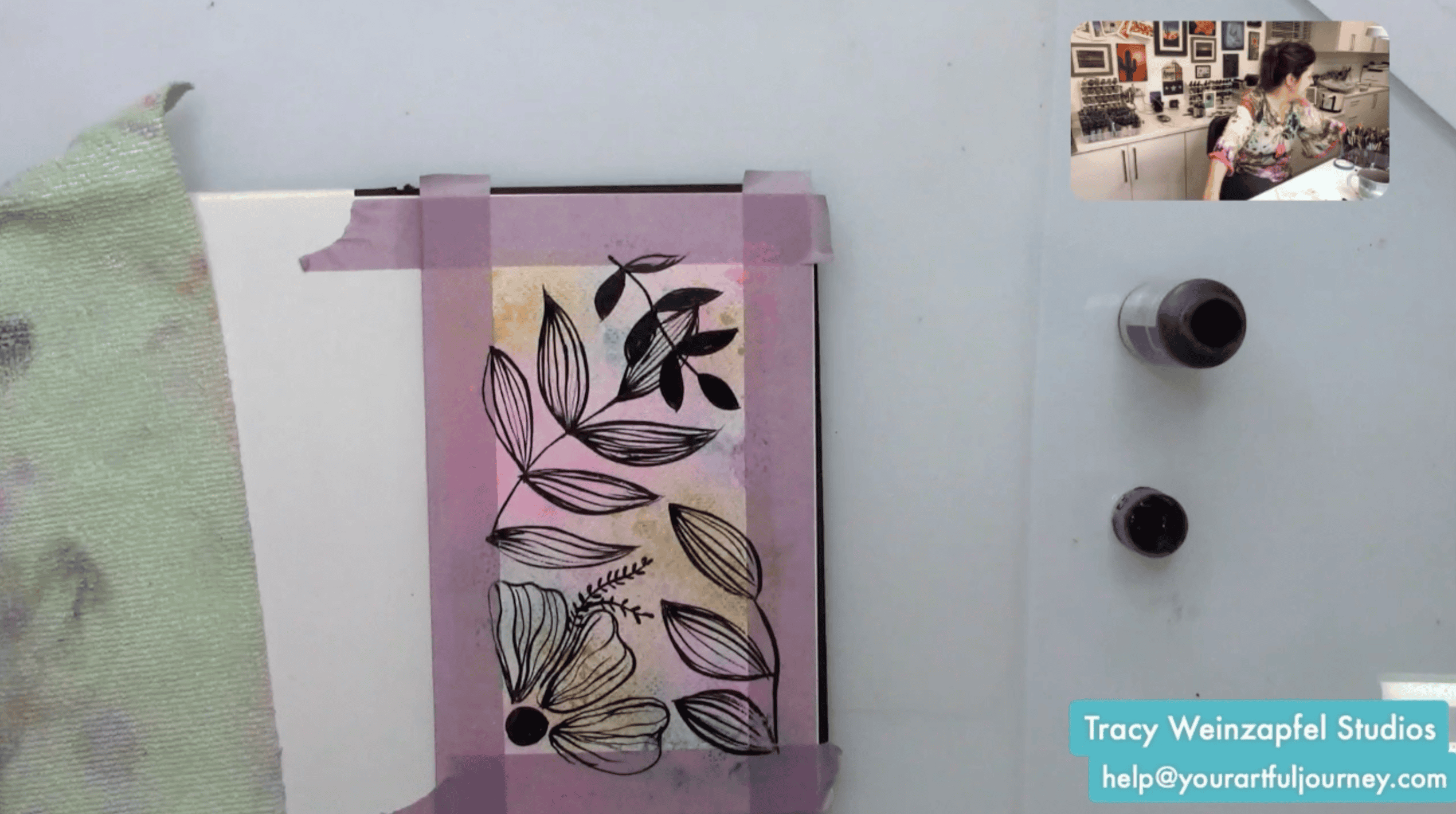
Pour or place a small amount of Carbon Black acrylic paint onto your palette. Load a 10/0 extra-long liner brush and begin drawing loose leaves directly over the sprayed background.
Hold the liner brush more upright and allow the long bristles to do the work. Draw curved stems and elongated leaf shapes with tapered points. Keep the forms organic and let some leaves extend off the page.
This project is not about realistic botanical illustration. The leaves should feel graphic, relaxed, and slightly abstract.
Once the outer shapes are established, add long curved lines inside each leaf. Vary the spacing and number of lines from leaf to leaf. Some leaves can remain open and airy, while others can be filled with stronger black sections. Continue adding stems and smaller leaves throughout the upper and lower areas of the page.
Use Carbon Black acrylic paint to fill portions of a few smaller leaves. Leaving some areas solid black creates contrast against the more open line-drawn leaves. Add a few additional small branches or botanical shapes wherever the composition feels empty, but be careful not to cover too much of the sprayed background.
Load your liner brush with 24K Gold Extreme Sheen acrylic paint and add gold accents to selected leaves. Paint narrow lines inside a few black leaves, trace portions of the botanical forms, or add subtle highlights along the stems.
The gold does not need to appear everywhere. A small amount catches the light beautifully and connects with the mica shimmer already present in the background.
Use a foam detailer or dotting tool with gold acrylic paint to create small groups of raised dots throughout the page. Place them near the leaves, in open background spaces, or around the edges of the composition. Vary the size and spacing of the dots so they feel organic rather than perfectly arranged. Add a few black dot clusters for contrast if desired.
Because the page includes several layers of spray, acrylic paint, and metallic dots, dry everything thoroughly before sealing. Raised dots may need extra drying time.
Once the artwork is completely dry, apply a thin layer of Dorland’s Wax Medium with a paper towel or soft cloth. Rub the wax gently across the entire painted surface, then buff it lightly. The wax protects the water-soluble sprays and gives the artwork a smooth finished surface without brushing over and reactivating the background.
Carefully peel away the painter’s tape to reveal the crisp white border. Pull the tape slowly and away from the artwork to reduce the risk of tearing the paper. Sign the finished page and tilt it in the light to enjoy all the subtle shimmer from the Spritz sprays and metallic gold details!
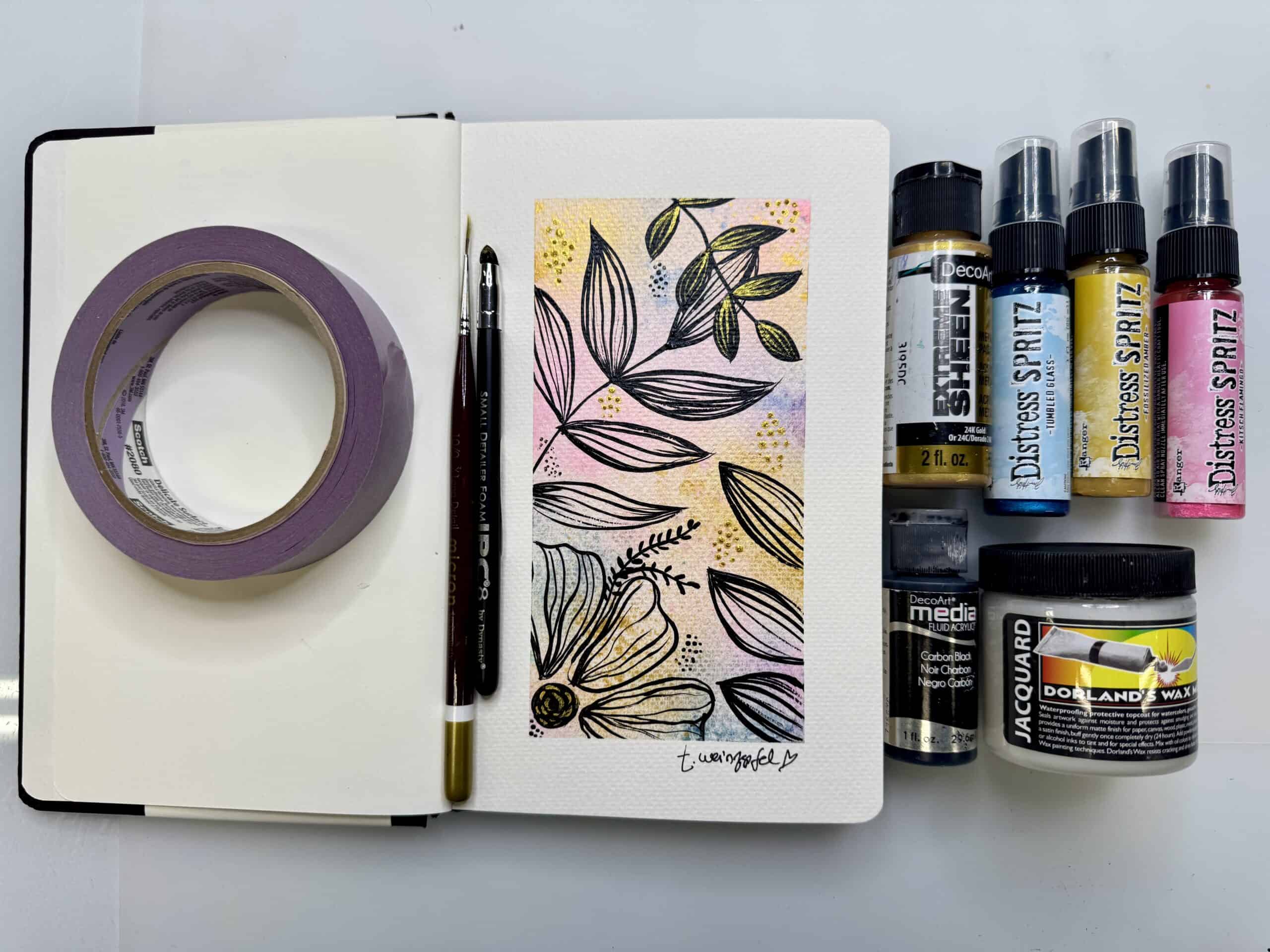
This botanical journal page proves that a project does not need a complicated supply list or detailed plan to feel complete. Three shimmering sprays, one liner brush, black acrylic paint, and a little metallic gold are enough to create something layered, expressive, and full of movement.
Most importantly, this project is a reminder to use the new supplies, experiment before you feel completely ready, and share what you create. You never know when a simple handmade piece might become something meaningful to someone else.
Watch the replay below!
Thank you for joining in on the creative fun. Join us LIVE every Wednesday at 5:30 pm PST on Facebook at Tracy Weinzapfel Studios.
Join the waitlist for Your Artful Journey! This is my exclusive creative membership where you can explore the world of art journaling! Join a community of support and inspiration with interactive art sessions full of tips and tricks, conversation, Q & As, and most of all, FUN!
Supply List:
Surface
Paints
Sprays
Sealer
Brushes & Tools
Check out Tracy’s Art Journal Starter Kit!
Tracy’s Resources Page and visit Tracy’s Shop