

If you’re looking for a bold watercolor flower painting idea with rich color and expressive detail, this mixed media floral tutorial is for you. In this step-by-step watercolor and acrylic painting tutorial, you’ll learn how to create a deep, saturated background using watercolors, then layer vibrant flowers on top using acrylic paint, ink, and white highlights. This technique is perfect for art journaling and beginner watercolor practice!

Prep your art journal page by taping down the edges with painter’s tape. Mist your watercolor palette with water to activate the colors and apply clean water across the surface of your page using a flat brush. This wet-on-wet watercolor technique allows the pigments to flow and blend naturally.
Using your Tropical watercolor palette, layer bright colors like yellow, pink, orange, and touches of purple across the page. Focus on building a deep, saturated background rather than a soft wash. Allow the colors to move and blend organically while avoiding overmixing.
As your watercolor spreads, use a clean, dry brush to lift excess water and prevent muddy areas. Watercolor follows water, so managing moisture is key to maintaining vibrant color. If certain areas become too blended, gently pull pigment away or let sections dry before adding more.

Once your watercolor background is fully dry, begin painting loose flower shapes using acrylic paint. Acrylic is used here because it sits on top of watercolor and provides stronger, more opaque color.
Start with lighter colors like yellow, applying a thin layer of gesso underneath if needed to keep the color bright. Paint simple, expressive flower shapes in different directions across the page, allowing some overlap with the background for a cohesive look.
Unlike traditional floral paintings, this technique encourages blending the flowers into the background rather than separating them. Allow edges to soften slightly and let some of the background color show through.
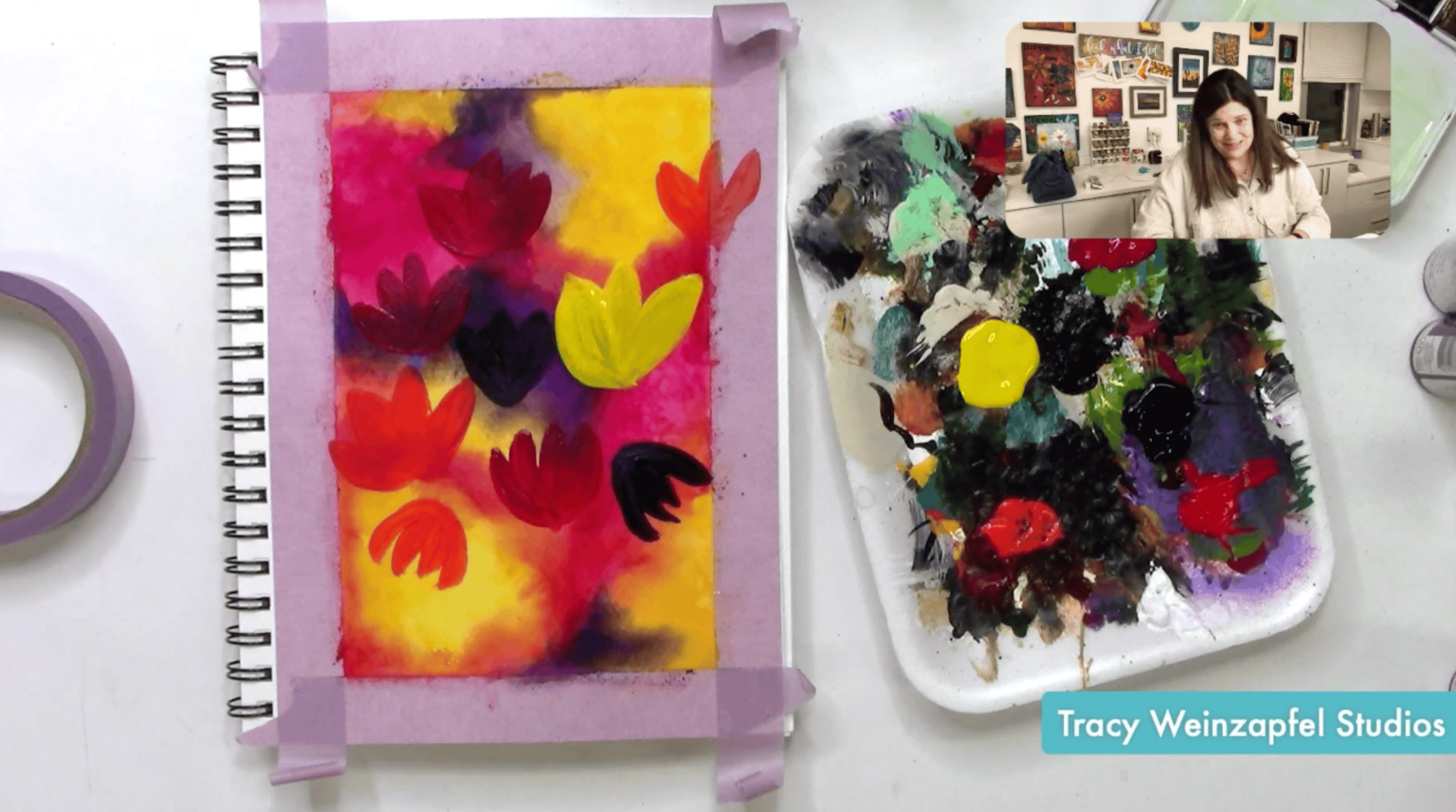
Using a fine liner brush with black acrylic paint (or a brush pen), begin outlining your flowers. Start at the base and pull long, flowing lines to create stems and petal structure. Add thin detail lines inside each petal to define shape and movement.
Continue adding black linework where petals overlap and meet. These details help separate the flowers from the background while maintaining the layered effect. Keep your lines loose and expressive rather than perfectly controlled.

To make the flowers stand out, apply Copic Opaque White to the petals. Add highlights along edges and within the petals to create contrast against the darker background.
To enhance the composition, add a few extra stems or floral elements using sweeping, curved lines. Add a final layer of black paint splatter with your fan brush. Splatter adds texture and visual interest while tying together the background and floral elements.
Once your painting is completely dry, seal it using Dorland’s Wax. This is ideal for mixed media watercolor projects because it protects the surface without reactivating the watercolor underneath. Apply a thin layer and buff gently to create a smooth, finished surface.

This bold watercolor flower painting tutorial is perfect for anyone who wants to explore mixed media art, art journaling, or beginner-friendly floral painting techniques. By combining watercolor backgrounds with acrylic layering, expressive linework, and high-contrast highlights, you can create a piece that feels both loose and intentional!
Watch the replay below!
Thank you for joining in on the creative fun. Join us LIVE every Wednesday at 5:30 pm PST on Facebook at Tracy Weinzapfel Studios.
Join the waitlist for Your Artful Journey! This is my exclusive creative membership where you can explore the world of art journaling! Join a community of support and inspiration with interactive art sessions full of tips and tricks, conversation, Q & As, and most of all, FUN!
Supply List:
- Fabriano or Grumbacher 7 X 10 Watercolor Journal
- Painter’s Tape
- Watercolors: Tropicals
- Acrylic Paints: Decoart Media/Americana Tiger Lily, Yellow Hansa Medium, Dioxazine Purple, Primary Magenta, and Carbon Black
- Brushes: Tracy Weinzapfel Sets
- Pentel Brush Marker
- Copic Opaque White
- Liner Brush: Micron 10/0 X Long Liner Brush
- Sealer: Dorland’s Wax
Check out Tracy’s Art Journal Starter Kit!
Tracy’s Resources Page and visit Tracy’s Shop
This looks exciting !…. I’ve never attempted mixed mediums… Thank you for this offer !…
HAPPY PAINTING! Tracy